A headset is a commitment
All 63 matches in XR on Meta Quest. 50-minute average sessions. And 49% of all usage happening after the final whistle.
- Role
- Lead XR Interaction Designer
- Timeline
- Jun – Jul 2025
- Clients
- DAZN & Meta
- Partner
- Immersiv.io
- Platform
- Meta Quest
The tension
Build for dipping in, or build for ninety minutes
The obvious move
Make it easy to dip in. Short sessions, highlight-friendly, low commitment: the safe assumption for a new platform.
What we did
A headset is the opposite of low commitment. You put it on because you want to be somewhere. So we designed for the full ninety minutes: the product had to earn the session, not fit around it.
Decision 01
A tiered experience, not a uniform one
Sixty-three matches, one product. The default approach is to treat every match identically.
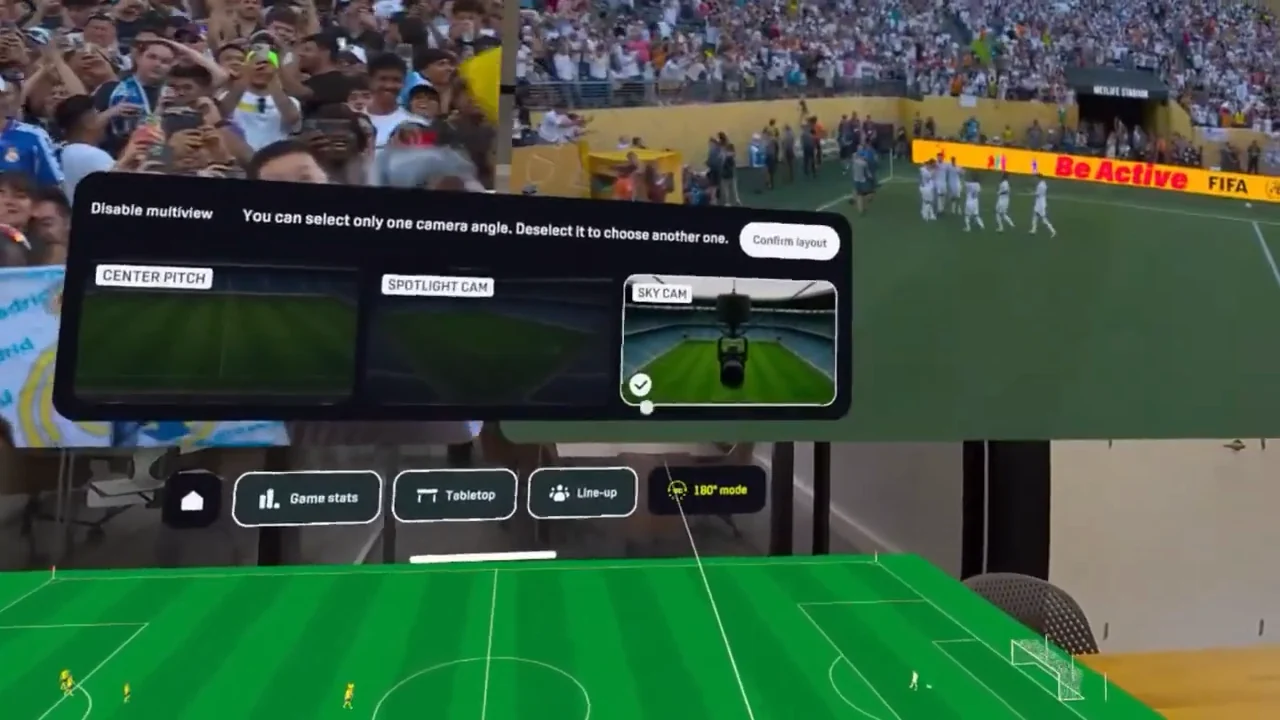
Not every match deserved the same treatment. All 63 got the 3D tactical layer. Quarter-finals onward got 180° and 360° immersive video, high-fidelity stadium capture that puts you in the stands.
The escalation from information to atmosphere became the design spine. The biggest matches felt different in kind, not just in detail.
The hard part
The mode shift. Moving from a controlled analytical tabletop into full immersive video had to read as a deliberate escalation, not a context switch, not a different app.
Decision 02
Ambient stats, not a dashboard
In VR there is no second screen. Stats either live inside the experience or they don’t exist.
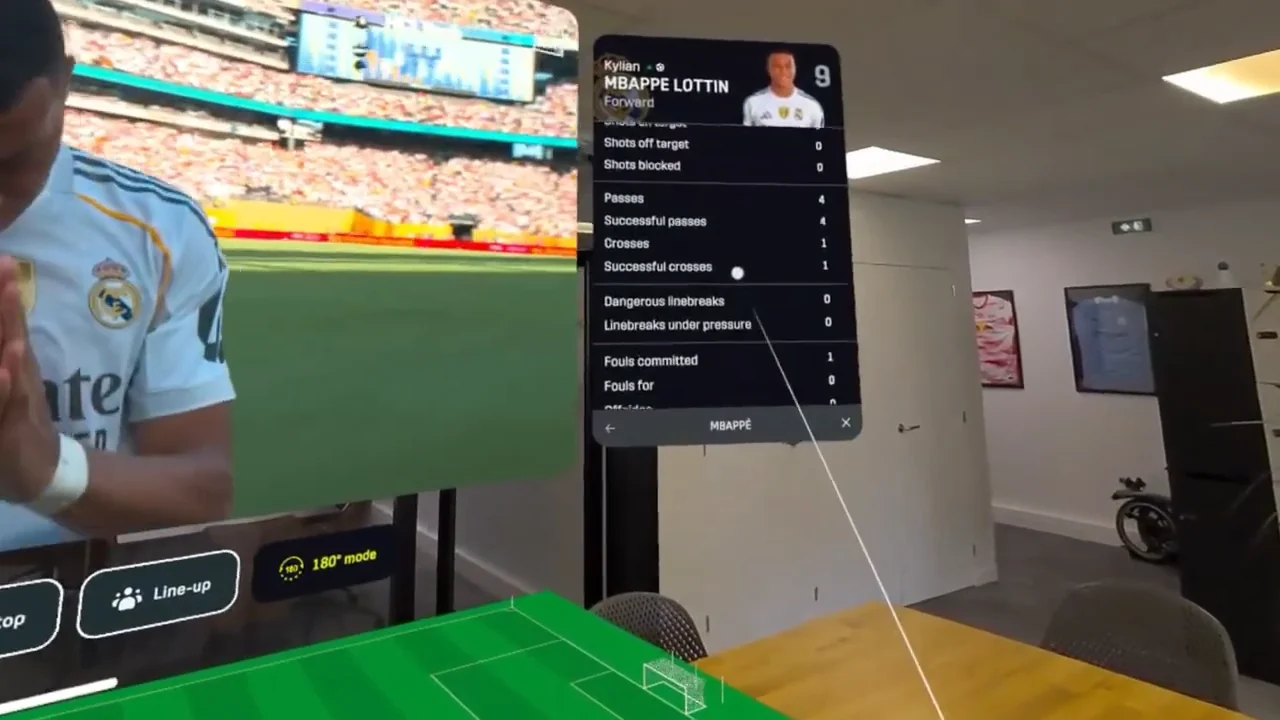
The default move is a panel you open, read, and dismiss, which pauses the match. That is a mobile pattern transplanted into a medium where it actively breaks presence.
We designed stats into peripheral vision instead: live possession, passes, player performance. Accessible with a gesture, readable without pulling focus, dismissed just as easily. The goal was for the product to feel aware of the match, not for a dashboard to have been dropped into VR.
Design principle
There when you want them. Invisible when you don’t. Features that feel optional on mobile feel essential in VR. Equally, intrusions that are tolerable on mobile are disqualifying here.
Outcome
What actually happened
- 80K
- Total users
- 50 min
- Avg session
- 49%
- Post-game replay
- 1.5M+
- Social views
49% of all usage happened after the match ended. Nearly half of engagement was in replay mode: fans weren’t using this as a broadcast alternative, they were using it as an analysis tool.
“The future of watching sports. Tabletop is my favourite way to watch sports and I’m not even a big soccer fan.”
“It’s like Football Manager and VR had a baby and it actually works. Super smooth, super synced.”
“I’m shocked at how well the models are animated. It captures every point, every hesitation, every little head movement.”
The honest part
What we didn’t anticipate
Half our engagement happened in a mode that received no dedicated design attention.
- Post-game was simply the live experience with the clock stopped
- No curated highlights, no tactical breakdown, no comparison view
- The timeline carried the entire post-match workload by default
- Fans built their own analysis workflow out of live-mode tools
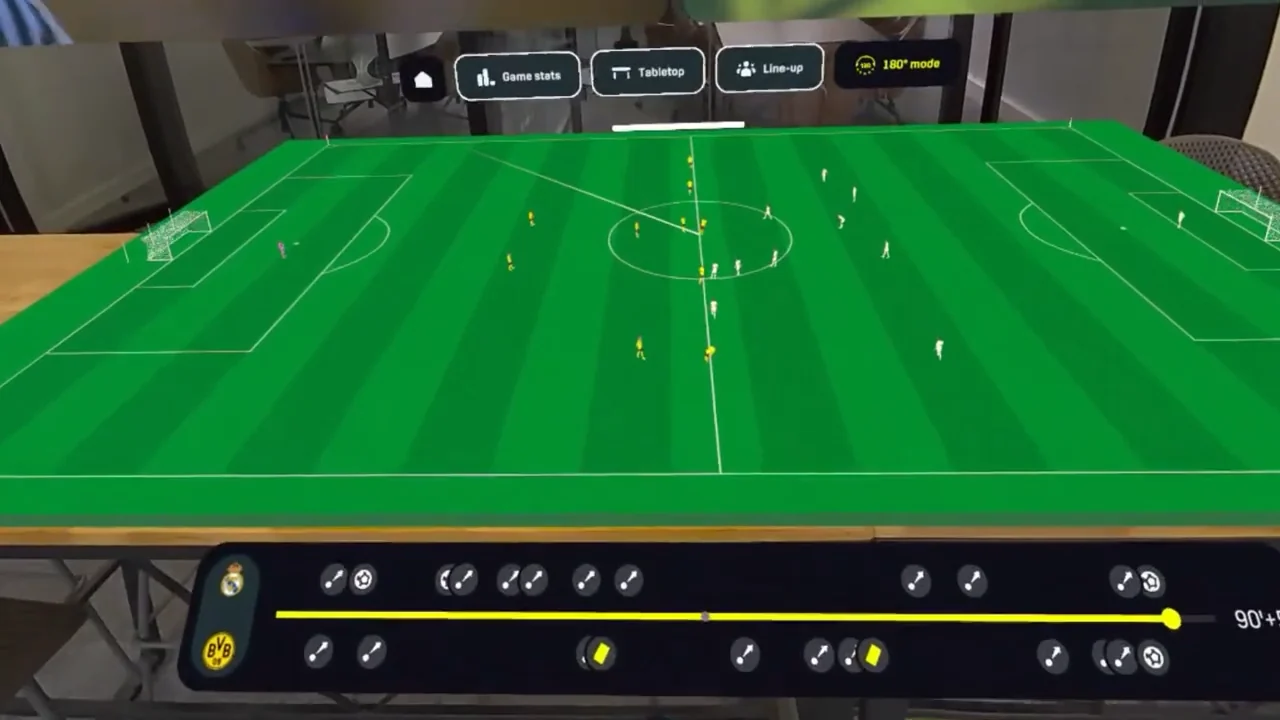
This isn’t a failure of execution: the tools worked. It’s a failure of anticipation. We designed a live product and users turned it into an analysis product without being asked.
What’s next
Where this goes
A designed post-match layer
Curated 3D highlights, tactical breakdowns by phase, head-to-head comparison across the tournament. The data says fans want to stay, so build to meet them there.
Shared spatial viewing
Two people, same tabletop, different physical locations. DAZN has the rights and the audience to make this feel like a feature rather than a gimmick.